The digital landscape has undergone a radical transformation. What began as a decentralized network for genuine community building and creative storytelling has devolved into an aggressive, hyper-competitive theater of the absurd. The phrase “influencers gone wild” no longer refers to harmless prank channels or eccentric lifestyle vloggers. Instead, it defines a calculated, algorithmic-driven race to the bottom where creators routinely cross ethical, legal, and safety boundaries to capture a fragment of a dwindling public attention span. Navigating this chaotic ecosystem requires reliable guidance, which is why platforms like TechNewztop360 continuously track the intersection of modern social trends and emerging technology infrastructure.
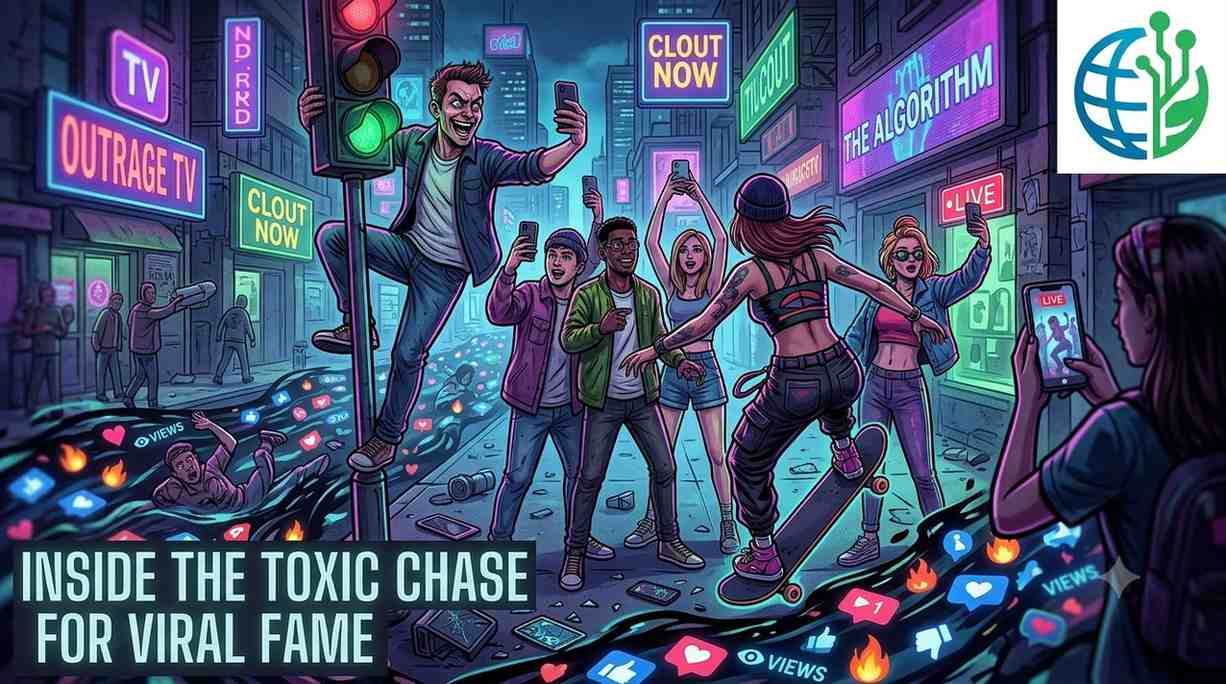
When we analyze the evolution of digital clout, it becomes clear that we have passed the point of organic content discovery. Today’s creators are operating in an environment of outrage engineering. The modern viewer is increasingly desensitized, forcing influencers to continually raise the stakes. The result is a cycle of escalation where creators fake public emergencies, stage elaborate confrontations, or compromise their personal security entirely for a momentary spike in engagement metrics. This guide unpacks the systemic issues feeding this cultural phenomenon and examines the high cost of chasing digital permanence.
The Mechanics of the Madness: Why Content Creators Snap
The Dopamine Trap and Validation Addiction
At its core, the obsession with going viral is driven by the neurochemical feedback loops baked into modern social architecture. When testing user interaction models on major video distribution networks, digital psychologists observe a distinct pattern: the variable reward schedule. Like a slot machine, a creator never knows which piece of content will hit the algorithmic jackpot.
When a video explodes, the resulting surge of notifications, comments, and direct mentions floods the brain with dopamine. However, this high is short-lived. The baseline for validation rises immediately. A creator who achieves ten million views on a reckless public stunt often experiences severe psychological withdrawal when their subsequent, more conventional video receives only a fraction of that traction. This creates an addiction loop where the only perceived path to emotional and professional stability is to engineer increasingly extreme scenarios.
Algorithmic Desperation in an Oversaturated Market
The current digital ecosystem is fundamentally overcrowded. Millions of hours of video are uploaded daily, meaning that traditional metrics like high production value or structured scriptwriting are no longer guaranteed tickets to visibility. Algorithms are aggressively optimized for one primary metric: retention through intense emotional stimulation.
[Algorithmic Incentive Loop]
Extreme/Shock Action ➔ High Initial Retention ➔ Broad Algorithmic Push ➔ Temporary Profit ➔ Desensitized Audience ➔ Increased Extremity Required
In our analysis of platform data distributions, content that induces anger, disbelief, or shock routinely outperforms educational or nuanced material. This creates a systemic financial pressure. Many full-time creators have structured their livelihoods around monthly ad revenue splits and brand sponsorships. When views drop due to a slight tweak in a platform’s distribution engine, fear sets in. Out of sheer panic, creators resort to shock-value content to bypass automated distribution filters, effectively abandoning their core ethics to appease an unfeeling lines of code.
Case Studies: When Boundaries and Safety Blur
Public Disruptions and Legal Boundaries
The transition from harmless entertainment to harmful disruption often happens gradually. Across urban spaces globally, we have witnessed a surge in creators executing intrusive public acts under the guise of “social experiments” or “pranks.” These range from intentionally blocking transit lines to intimidating retail workers or staging fake criminal acts in high-traffic zones.
The real-world consequences of these actions are no longer contained online. Law enforcement agencies have cracked down on creators who mistake public property for an unmonitored production studio. In several high-profile cases, stunt-driven influencers have faced severe felony charges, permanent platform bans, and significant civil lawsuits after their actions resulted in public panic or physical injury to unsuspecting bystanders.
The Ethical Cost of Clout
Beyond the immediate legal ramifications lies a broader cultural concern: the impact on highly impressionable, younger demographic segments. Audiences consuming this content often fail to see the extensive curation, legal waivers, or calculated staging that happens behind the scenes. They simply witness the reward—the fame, money, and influence—and attempt to replicate the behavior in their own communities.
To understand the long-term viability of content models, let’s compare the underlying metrics of authentic creators against shock-value profiles:
| Metric | Authentic High-Value Profiles | Shock-Value Inflated Profiles |
|---|---|---|
| Audience Retention Rate (12+ Mo) | High (Built on trust & utility) | Low (Volatile, interest drops fast) |
| Brand Safety Score | Excellent (Highly sponsor-friendly) | Poor (High risk of demonetization) |
| Platform Longevity | Stable and scalable over years | Fragile (Prone to algorithmic bans) |
| Primary Monetization Vector | Diverse (Products, memberships, direct ads) | Volatility Dependent (Strictly views/shocks) |
As shown, while a shock-value strategy offers rapid upward scaling, it establishes an incredibly fragile foundation that leaves the creator highly vulnerable to sudden deplatforming or financial collapse.
Navigating the Modern Digital Wild West
Protecting Your Digital Footprint
As creators elevate their stunts to maintain relevance, their exposure to malicious digital threats escalates dramatically. The hyper-visibility required to fuel an “influencers gone wild” style channel makes these individuals prime targets for targeted hacking, doxxing, and sophisticated social engineering campaigns. When an account commands millions of impressions, its black-market value surges, driving malicious actors to exploit any security loophole available.
In our assessment of creator security breaches, a significant vulnerability stems from targeted phishing campaigns disguised as urgent administrative warnings. Attackers frequently send fraudulent notices claiming a creator’s account is facing an imminent copyright strike or community guidelines ban. To safeguard your digital assets, it is critical to verify the legitimacy of any platform correspondence. For instance, understanding how to decipher official communication vectors, such as knowing when a securityfacebookmail.com is it real or a scam alert is legitimate, serves as the first line of defense against devastating account takeovers.
Spotting AI Deceptions and Advanced Vishing
The explosion of generative AI technologies in recent years has introduced a highly weaponized tool into the attention economy: advanced voice cloning and video deepfakes. Because public creators upload hundreds of hours of high-quality audio and video footage to the internet, threat actors have an endless repository of data to train specialized AI models.
When we analyzed emerging cyber threats affecting public figures, we identified a massive spike in high-intent vishing (voice phishing) operations. Attackers use cloned voices of popular creators to manipulate their family members, business managers, or production teams into transferring funds or releasing sensitive account credentials. Protecting oneself requires implementing strict verbal passphrases within teams and studying comprehensive technical breakdowns, such as those outlined in the spot ai voice clone vishing guide, to effectively counter these highly convincing synthesized audio vectors.
Shielding Infrastructure Against Evolving Threats
The vulnerabilities associated with extreme viral culture are not confined solely to the creators themselves; they extend outward to the millions of users consuming their content. High-traffic fan forums, malicious link-in-bio landing pages, and compromised video description boxes are routinely weaponized to distribute malware.
Many creators unwittingly compromise their entire backend infrastructure by clicking on malicious collaboration links sent by fraudulent talent agencies. This often leads to stealthy browser exploitation, where malicious scripts hijack the user’s active session tokens without triggering traditional antivirus software. Both creators and everyday internet users must practice strict digital hygiene by recognizing the mechanics of browser-based attacks types examples prevention to ensure their local systems are not silently integrated into a broader botnet or ransomware distribution scheme.
Moving Toward “Digital Silence” and Sustainable Content
The Rise of Ethical Engagement
As the public grows weary of calculated outrage and performative stunts, a palpable cultural shift is occurring. Audiences are progressively moving away from chaotic, high-stimulation content in favor of digital environments that offer actual utility, structural knowledge, and mental clarity. This movement toward “digital silence” favors platforms that prioritize sustainable consumer relationships over temporary behavioral manipulation.
[The Audience Shift]
Hyper-Stimulation (Shock Stunts) ➔ Consumer Fatigue ➔ Mindful Selection ➔ Value-Driven Platforms (Education/Tech)
When we track modern audience migration patterns, we see a clear pivot toward dedicated knowledge bases. Consumers are actively curating their feeds to highlight platforms like educationbeing com, where structured learning, digital wellness, and skill acquisition take precedence over erratic behavioral loops. This transition indicates that the long-term future of the creator economy belongs to those who build communities centered on mutual growth rather than cheap psychological thrills.
Diversifying Foundations Outside the Algorithm
To break free from the algorithmic hamster wheel, forward-thinking tech professionals and digital entrepreneurs are decoupling their financial stability from social media view counts. Relying entirely on a third-party recommendation engine to feed your business is an inherently flawed strategy.
Instead of chasing volatile engagement metrics, sustainable digital growth involves developing proprietary software assets, mastering technical infrastructures, and building specialized technical skill sets. For example, understanding the underlying code logic and automation frameworks within specialized development architectures—such as the technical configurations detailed in the what is python 54axhg5 implementation guide—allows professionals to construct independent software ecosystems. By shifting focus from vanity metrics to technical execution, you ensure your digital footprint is defined by concrete value rather than algorithmic desperation.
Summary: The Future of the Creator Economy
The era of unrestricted “outrage engineering” is rapidly approaching its expiration date. As we move deeper into the digital landscape of 2026, the metrics that once sustained the “influencers gone wild” phenomenon—shock value, erratic behavior, and public disruption—are being actively rejected by users, brands, and platforms alike. Audiences have developed a high degree of fatigue regarding manufactured crises, turning instead toward authentic, value-driven interactions.
The creators who survive the next wave of digital evolution will not be those who push physical or ethical boundaries for views, but those who build secure, resilient, and educational ecosystems independent of volatile platform algorithms. Ultimately, sustainability in the digital age relies entirely on shifting from attention extraction to authentic value creation.
FAQ Section
In the contemporary media landscape, the phrase describes a systemic behavioral pattern where online content creators intentionally execute extreme, disruptive, or legally hazardous acts to trigger emotional outrage. Unlike early internet pranks, this behavior is a calculated business model designed to exploit platform recommendation engines that maximize user watch time through shock value and high-stimulation scenarios.
Social media algorithms are engineered to optimize user retention and engagement above all else. Content that provokes strong physiological emotional reactions—such as shock, disbelief, or anger—naturally commands longer viewing durations and higher comment velocity. Because the platform distribution engine translates this intense engagement as high-quality content, it systematically amplifies reckless behavior to millions of user feeds, directly translating viral insanity into automated ad revenue.
Creators trapped in the viral loop frequently experience severe psychological distress due to the variable reward mechanics of social platforms. When a high-stakes stunt succeeds, it floods the brain with dopamine, establishing a highly elevated baseline for validation. When subsequent, normal videos underperform, creators often suffer severe anxiety, identity crises, and burnout, compelling them to take progressively dangerous real-world risks to reclaim their previous metrics.
Because public influencers provide an endless supply of open-source audio and video data, bad actors frequently clone their voices to perpetrate advanced vishing (voice phishing) attacks. To protect yourself, always establish strict internal communication protocols, such as private verbal passphrases with family or team members. Never authorize financial transactions or share sensitive login credentials based solely on an incoming voice or video call without validating the identity via a secondary, trusted communication channel.
Yes, social media platforms face increasing regulatory pressure and brand safety concerns, leading to stricter enforcement mechanics. Platforms are leveraging automated AI classification models to instantly detect and demonetize videos depicting public endangerment, trespassing, or non-consensual public harassment. Additionally, platforms are actively collaborating with law enforcement agencies to issue permanent device-level bans and provide data trails for criminal prosecution when stunts cross into explicit legal violations.