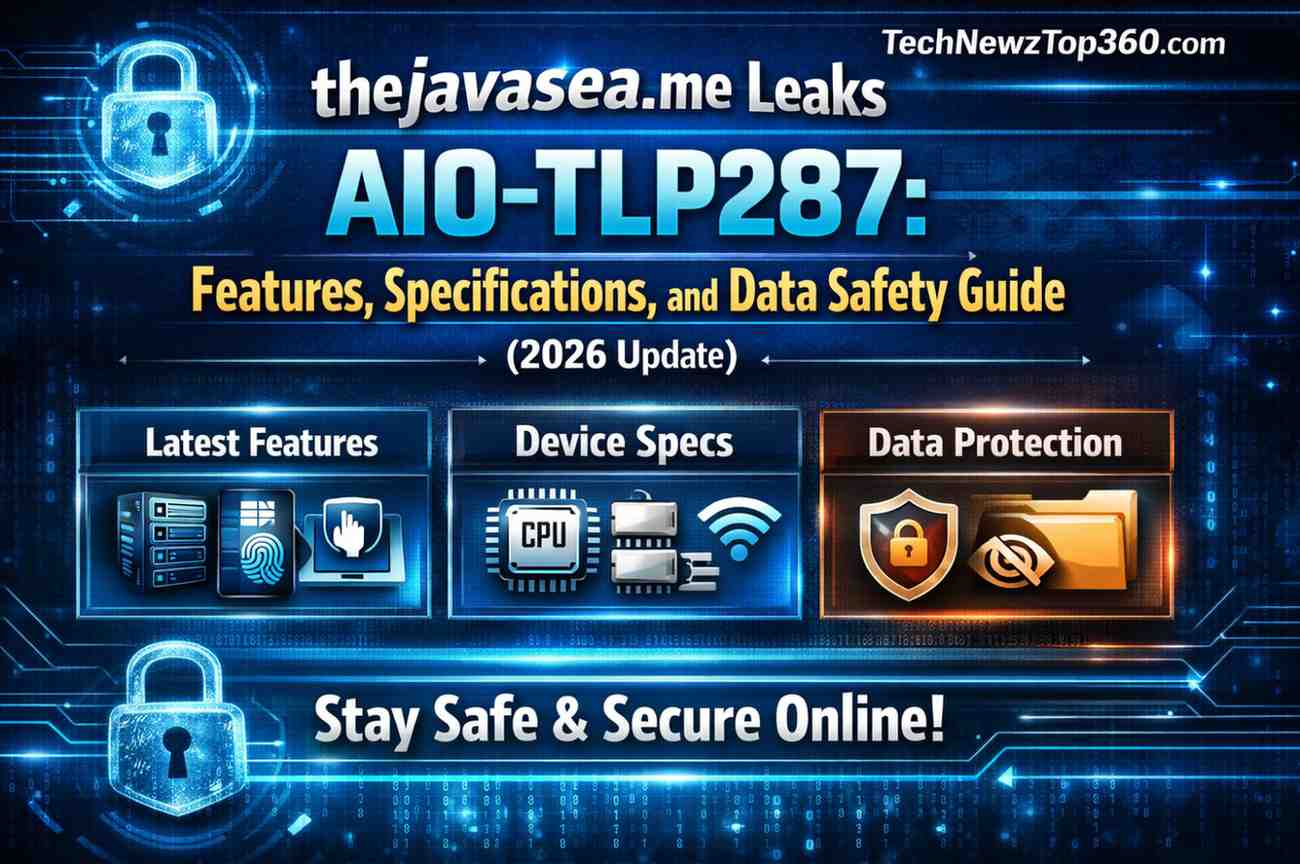
Imagine waking up to discover that your digital identity—everything from your Netflix password to your corporate Slack logs—is sitting in a neatly organized folder on a public forum. In early 2026, that nightmare became a reality for millions. The thejavasea.me leaks AIO-TLP287 saga has sent shockwaves through the tech world, reportedly exposing the data of up to 50 million users.
This isn’t just another random dump of emails. As noted by experts at TechNewzTop360, this incident represents a massive “All-In-One” (AIO) database that has fundamentally changed how we view “grey-area” websites. Unlike previous breaches that were messy and hard to navigate, AIO-TLP287 is professionally structured, making it a goldmine for malicious actors and a massive headache for cybersecurity teams.
In this comprehensive guide, we will break down exactly what this leak contains, the technology behind the “AIO-TLP” tag, and, most importantly, how you can protect yourself in an era where AI-powered cyber attacks are making these breaches even more dangerous.
What is thejavasea.me?
To understand the leak, you first have to understand the platform. thejavasea.me didn’t start as a nefarious dark-web portal. It originally gained traction as a niche resource site for developers and tech enthusiasts, offering software tools, scripts, and internal documentation that was hard to find elsewhere.
The Shift to “Grey-Area” Content
Over time, the site’s reputation shifted. It became a “grey-area” hub—a place where the lines between “sharing resources” and “distributing stolen data” became dangerously thin. The platform began hosting sensitive login credentials, internal organizational memos, and proprietary software files.
Operational Style
What makes thejavasea.me particularly elusive is its operational model:
- Anonymous Administration: The site is run by a group of anonymous admins who operate behind layers of encryption.
- Deep Secrecy: They utilize domain hopping and mirror sites to stay one step ahead of legal agencies.
- Structured Hosting: Unlike chaotic hacker forums, thejavasea.me is known for its “clean” interface, making it easy for even non-technical users to access leaked batches.
Decoding AIO-TLP287: Meaning & Specifications
The term AIO-TLP287 sounds like a complex piece of military jargon, but it’s actually a very specific way of categorizing data.
AIO (All-In-One)
In the world of data breaches, “AIO” stands for All-In-One. This means that instead of the leak containing just one type of data (like only passwords), it is a massive bundle. It combines emails, personal addresses, financial logs, and corporate secrets into a single, unified package.
TLP (Traffic Light Protocol)
The “TLP” part refers to the Traffic Light Protocol, a set of designations used by the cybersecurity community to ensure that sensitive information is shared with the right audience. Ironically, the leakers used this professional protocol to label their stolen goods.
| TLP Color | Sensitivity Level | Who Is Supposed to See It? |
|---|---|---|
| RED | High | Strictly restricted to specific named individuals. |
| AMBER | Medium | Shared only within a specific organization or group. |
| GREEN | Low | Shared within a community, but not public. |
| WHITE | Public | Information that can be freely shared with the world. |
The “287” Version Identifier
The number 287 serves as a version or batch identifier. In the context of thejavasea.me, it marks this specific collection as one of the largest and most recent “releases,” distinguishing it from previous, smaller leaks.
What Makes AIO-TLP287 Stand Out? (Features & Specs)
Most leaks are forgotten within a week. AIO-TLP287 is different because of its sheer scale and “professional” organization.
1. Massive Scale
The most alarming feature is the volume. With 50 million records, this leak touches almost every corner of the internet. From casual social media users to high-level corporate executives, the net cast by this breach is incredibly wide.
2. Extreme Categorization
The leakers didn’t just dump text files. The data is structured. It is searchable by name, company, or domain. This level of organization is what makes it so dangerous—it allows bad actors to perform “target profiling” in seconds.
3. Content Variety (The Specifications)
- Login Specs: This includes usernames, emails, hashed passwords, and even 2FA (Two-Factor Authentication) backup codes.
- Corporate Specs: Internal project blueprints, private memos, and admin-level credentials for internal company dashboards.
- Financial Specs: Beyond just credit card numbers, the leak contains transaction histories and crypto-wallet addresses, which can be used for long-term financial tracking.
The Technical “How”: Vulnerability Analysis
How did such a massive amount of data end up on a site like thejavasea.me? It wasn’t just one “super-hack”; it was a combination of several browser-based attacks and human errors.
- Social Engineering: Many users were tricked into sharing access through manipulative “support” chats or fake login portals.
- Vulnerability Exploitation: Hackers targeted unpatched legacy systems. If a company hadn’t updated its server software in six months, they were a sitting duck for the AIO-TLP287 sweep.
- Phishing & Cache Poisoning: Deceptive links were used to target the cache of users’ browsers. Once the cache was compromised, sensitive session tokens were harvested and sent back to the leakers.
- Insider Threats: Perhaps the most disturbing aspect is the role of insiders. Some of the data in AIO-TLP287 appears to have been intentionally “dumped” by disgruntled employees or contractors who had legitimate access.
Risks & Implications (Why This Matters)
The fallout from the thejavasea.me leaks AIO-TLP287 is divided into two categories: personal and professional.
Individual Risks
The most immediate threat is Identity Theft. With your name, address, and financial history exposed, a criminal can open lines of credit in your name. However, there is also the risk of Blackmail. If internal memos or private communications are leaked, they can be used for character assassination or corporate espionage.
Corporate Risks
For businesses, the implications are a legal nightmare. Under regulations like GDPR or CCPA, companies that fail to protect user data face millions of dollars in fines. Beyond the money, there is the Loss of Intellectual Property. If a company’s “trade secrets” are part of the AIO-TLP287 batch, they lose their competitive edge instantly.
Is thejavasea.me Safe to Visit?
Many curious users try to visit the site to see if their own data is there. This is a huge mistake.
- Malware Risk: Sites that host leaked data are often crawling with “drive-by downloads.” Just clicking a link can install a keylogger on your device.
- Tracking: Law enforcement agencies monitor these sites. If you visit them without extreme protection, your IP address could end up on a watch list.
- The “Mystery” Factor: The site frequently shifts domains. A link that worked yesterday might lead to a phishing clone today designed to steal more of your data.
Step-by-Step Mitigation & Protection
If you suspect your data might be part of the AIO-TLP287 leak, you need to act immediately. Here is your 2026 checklist for digital survival.
1. Radical Password Hygiene
Stop using the same password for everything. Move to a dedicated password manager and use complex strings that include uppercase, lowercase, numbers, and symbols. If your “master” password was leaked, change it immediately.
2. Move Beyond SMS 2FA
The AIO-TLP287 leak proved that SMS-based 2FA is vulnerable. If a hacker has your personal details, they can perform a “SIM swap” and intercept your codes. Switch to hardware security keys (like Yubikeys) or authenticator apps.
3. Browser Safety & Cache Clearing
Since many of these leaks originate from browser-based vulnerabilities, make it a habit to clear your browser cache and cookies weekly. This prevents session tokens from sitting “idle” on your machine.
4. Regular Security Audits
For business owners, the “set it and forget it” mentality is over. You must perform monthly vulnerability scans. Using tools to monitor the dark web for your company’s domain can give you a head start before a leak becomes public.
Conclusion & The Future of Data Privacy
The thejavasea.me leaks AIO-TLP287 incident is a powerful reminder that in 2026, the digital landscape is more like a vast, unpredictable ocean than a secure vault. As these “All-In-One” databases become more common, the responsibility for data safety shifts back to the individual.
We can no longer rely solely on platforms to keep us safe. Whether it’s through stronger encryption, better browser habits, or staying informed about the latest threats, proactive defense is the only way forward.
Want to stay ahead of the next big breach? Subscribe to our newsletter for real-time cybersecurity alerts and deep dives into the software keeping the digital world running. Stay safe, stay vigilant.
FAQ: Frequently Asked Questions
Answer: Due to legal pressure, the site faces frequent downtime. However, it often reappears under different domain extensions (.net, .io, or onion links).
Answer:- AIO describes the content (everything in one bundle), while TLP describes the sensitivity (how restricted the information should be).
Answer:- Do not check on thejavasea.me itself. Instead, use trusted third-party tools like “Have I Been Pwned” or specialized cybersecurity monitoring services.
Answer:- Depending on your jurisdiction, downloading stolen corporate data or private PII can carry heavy legal penalties. It is always better to stay away.