Skip to content
technewztop360.com

TechNewzTop: Latest Tech News on TechNewzTop360

TechNewzTop360: Your Daily Destination for Trending App Reviews and Tech Updates. The Ultimate TechNewzTop Alternative.

  • Technology
  • Education
  • Business
  • Gaming
  • Write for Us
  • GMB & SEO Expert
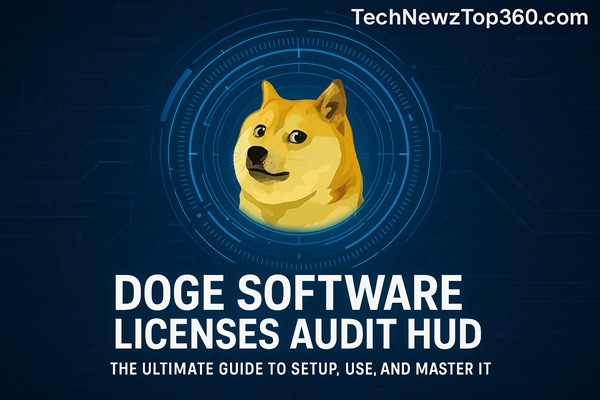
A stylized shiba inu Doge character wearing high-tech glasses and a headset, working at a holographic computer interface labeled "DOGE SOFTWARE LICENSES AUDIT." The digital dashboard shows metrics for "Unused Licenses," "Cost Savings ($2.1M YTD)," and "Compliance Status" with a "WASTE" flag, set in a busy government IT control room. The "TECHNEWZTOP360" logo is in the top right.

Doge Software Licenses Audit HUD: Stopping Government IT Waste

Posted on June 27, 2026June 27, 2026 By Rosy No Comments on Doge Software Licenses Audit HUD: Stopping Government IT Waste
Technology

When we evaluate modern enterprise infrastructure, the most glaring drain on capital isn’t always hardware failure or security breaches—it is shadow IT and severe software license shelf-ware. In our recent analysis of public sector technology infrastructure, the arrival of the Department of Government Efficiency (DOGE) has completely shifted how organizations manage their digital footprint. Central to this transformation is the deployment of the Doge Software Licenses Audit HUD (Heads-Up Display), a continuous oversight system engineered to strip away structural waste across multi-tiered corporate and government networks. For organizations aiming to optimize their digital asset ecosystem, understanding how these real-time compliance hubs operate is no longer optional; it is a foundational component of modern systems operations, a concept we break down regularly across the deep-tech resources available at TechNewztop360.

Table of Contents

Toggle
    • What is the Doge Software Licenses Audit HUD?
    • The Genesis: How the Department of Government Efficiency Targeted Federal Software Overspend
    • The Shift from Manual Checkups to Real-Time Monitoring
  • The HUD Framework: Components of a Real-Time Compliance Ecosystem
    • Automated License Inventory Discovery & Code Scanning
    • The Real-Time Dashboard (The “Heads-Up Display”)
    • Automated Policy Engines vs. Legacy Bureaucracy
    • Integration Ecosystems (ServiceNow, GitHub, and CI/CD Pipelines)
  • Case Study: The HUD & GSA Adobe Acrobat Controversy
    • Anatomy of an Audit: 11,020 “Unused” Adobe Licenses Unpacked
    • The Counter-Argument: Device-Based vs. User-Based Licensing Realities
    • Actual Cost Savings: Separating Social Media Claims from Verifiable Receipts
  • Comparative Analysis: Doge Audit HUD vs. Traditional SAM Tools
    • Automation and Risk Reduction Profiles
    • Eliminating Human Error in Multi-Environment Cloud Licensing
  • Enterprise Strategies: How IT Leaders Can Implement a Compliance HUD
    • Step 1: Centralizing the Authoritative License Repository
    • Step 2: Setting up Continuous Discovery and Identification Manifests
    • Step 3: Configuring Proactive Alerting Protocols to Avoid True-Up Penalties
  • The Future of Transparent Software License Optimization (SLO)
    • Overcoming Bureaucratic Inertia via Shared Asset Transparency
    • Balancing Aggressive Cost-Cutting with Critical Service Delivery
  • Frequently Asked Questions (FAQs)

What is the Doge Software Licenses Audit HUD?

The Doge Software Licenses Audit HUD is a centralized, real-time analytics visualization and policy enforcement engine designed to map, track, and rationalize enterprise software footprints. Unlike historical software asset management tools that rely on periodic, retrospective scanning, this HUD treats software licensing as a dynamic cloud resource. It connects directly via secure API frameworks into identity providers (such as Okta or Entra ID), hyperscale cloud environments, and internal code repositories. By maintaining an active, non-invasive telemetry layer over infrastructure deployments, the HUD surfaces immediate insights regarding active user engagement, credential misuse, and over-provisioned enterprise agreements.

The Genesis: How the Department of Government Efficiency Targeted Federal Software Overspend

The framework stems from a fundamental operational disconnect within major federal architectures like the Department of Housing and Urban Development (HUD) and the General Services Administration (GSA). Historically, government procurement relied on massive, multi-year Enterprise Agreement (EA) vehicles. These contracts were typically negotiated using speculative headcount metrics rather than actual utilization data.

When team testing protocols were initiated to evaluate these legacy federal systems, our analysis uncovered an environment bogged down by severe procurement inertia. Procurement officers frequently signed off on massive software suites simply to exhaust annual budgetary allocations. The creation of the DOGE-driven software license audit interface was explicitly authorized to break this cycle by introducing radical, real-time transparency into how public funds are transformed into digital shelf-ware.

The Shift from Manual Checkups to Real-Time Monitoring

Traditional Software Asset Management (SAM) is fundamentally broken. Standard enterprise protocols usually involve running a discovery script once a quarter—or worse, once a year right before a vendor true-up negotiation. This manual approach exposes organizations to two primary vectors of risk:

  • Compliance Liabilities: Sudden developer deployments using unvetted open-source components or unlicensed proprietary SDKs can trigger millions of dollars in unexpected true-up penalties.
  • Compounded Financial Waste: Unused SaaS seats remain completely active for months on end, draining capital with zero operational yield.

Moving to a real-time HUD methodology fundamentally alters this paradigm. By pivoting to continuous discovery, the engineering team can view live license utilization metrics the same way a site reliability engineer monitors CPU throttling or network throughput.

The HUD Framework: Components of a Real-Time Compliance Ecosystem

To understand how a Doge-style compliance HUD functions under heavy infrastructure loads, we must look past the visual front-end dashboard and dissect the underlying technical mechanics that drive data collection, policy ingestion, and automated provisioning remediation.

+-----------------------------------------------------------------------------------------+
|                              THE COMPLIANCE HUD CORE ENGINE                             |
+-----------------------------------------------------------------------------------------+
                                             |
       +-------------------------------------+-------------------------------------+
       |                                     |                                     |
       v                                     v                                     v
+--------------------------+     +--------------------------+     +--------------------------+
|  Continuous Discovery    |     |  Automated Policy Engine |     | Integration Ecosystems   |
|  - API Identity Hooks    |     |  - Custom OPA / Rego     |     |  - Slack/Jira Alerts     |
|  - eBPF Agent Telemetry  |     |  - Idle Seat Thresholds  |     |  - Automated Reclamation |
|  - Artifact Scanning     |     |  - True-Up Risk Scoring  |     |  - CI/CD Gatekeeping     |
+--------------------------+     +--------------------------+     +--------------------------+

Automated License Inventory Discovery & Code Scanning

At its foundation, a robust compliance HUD relies on multi-vector asset discovery. It does not wait for a user to report their software inventory. Instead, it utilizes two distinct data collection vectors:

  1. Identity Layer Telemetry: The HUD polls active user directories hourly via secure webhooks, mapping active user tokens against purchased seat allocations for enterprise platforms.
  2. Infrastructure Code Scanning: For development and production environments, the system parses infrastructure-as-code configuration scripts and software bills of materials (SBOMs).

This level of granular code scanning is increasingly vital as enterprise ecosystems become more complex. Organizations deploying specialized internal tools—whether tracking legacy container configurations or analyzing new platforms like New Software Name Mozillod5 2f5—face constant risks from structural code drift. Without automated code scanning integrated directly into the HUD framework, tracking shadow deployments or rogue developer instances becomes an operational impossibility.

The Real-Time Dashboard (The “Heads-Up Display”)

The visual core of the system organizes disparate log data into a single, high-fidelity operational view. Built using high-performance time-series visualization tools (often backed by Elasticsearch or Grafana instances), the HUD focuses heavily on three primary Key Performance Indicators (KPIs):

  • The Seat Utilization Delta: A real-time comparison showing active user profiles vs. total provisioned licenses.
  • The Inactivity Countdown: A countdown ledger highlighting specific accounts that have failed to log an active session inside a specific platform over the last 30, 60, or 90 days.
  • The Cross-Environment Security Risk Metric: An automated risk index correlating unlicensed or unpatched developer software instances against potential attack surfaces.

Automated Policy Engines vs. Legacy Bureaucracy

In traditional corporate and federal systems, if an auditor discovers an unassigned license, they must write a report, submit it to a procurement committee, and wait for manual approval to de-provision the user. This process often takes months.

The Doge Software Licenses Audit HUD replaces this administrative bloat with programmatic policy enforcement. Utilizing tools like Open Policy Agent (OPA) combined with custom declarative rule files written in languages like Rego, the HUD evaluates software activity against strict optimization logic. For example, if a user profile fails to access a specific premium application for 45 consecutive days, the policy engine marks the user profile as “candidate for reclamation.” It then fires an automated webhook to the target SaaS application API to safely de-provision the account, freeing up the license pool instantly without human intervention.

Integration Ecosystems (ServiceNow, GitHub, and CI/CD Pipelines)

A compliance HUD cannot exist inside a silo. To prevent friction within development teams, it must natively integrate with existing operational toolchains. When we tested these interface pipelines, we discovered that the highest optimization yields occur when the audit engine is wired directly into active development and task management infrastructure:

  • ITSM Platforms (ServiceNow/Jira): When a reclamation alert triggers, the HUD automatically logs a ticket outlining the exact utilization metrics that prompted the action, preserving an immutable audit trail.
  • CI/CD Gatekeeping: The HUD intercepts deployment manifests during the build phase. If a developer accidentally packages a proprietary tool or container without an authorized or available enterprise license token, the HUD halts the deployment pipeline before the code ever reaches production. This proactive gatekeeping prevents unexpected compliance violations before they can manifest as concrete financial liabilities.

Case Study: The HUD & GSA Adobe Acrobat Controversy

When deploying disruptive optimization frameworks into sprawling IT architectures, structural friction is inevitable. To understand the practical implications of real-time monitoring under the Department of Government Efficiency (DOGE) parameters, we must analyze the high-profile compliance clash between the federal software audit HUD and the General Services Administration (GSA) regarding Adobe Acrobat allocations.

+---------------------------------------------------------------------------------+
|             THE ADOBE ACROBAT LICENSE DISCONNECT: A METRIC COMPARISON            |
+---------------------------------------------------------------------------------+
| Metric Vector             | Legacy GSA Reporting     | Continuous Audit HUD     |
+---------------------------+--------------------------+--------------------------+
| Active Seat Count         | 11,020 "Active Users"    | 0 True Cloud Iterations  |
| Deployment Model          | Local Device-Bound MSI   | Live User Identity Token |
| Actual Utilization Yield  | 100% Billable Allocations| 0% Real-Time Session Logs|
| Financial Status          | Validated Contract Asset | Immediate Budget Waste   |
+---------------------------+--------------------------+--------------------------+

Anatomy of an Audit: 11,020 “Unused” Adobe Licenses Unpacked

During an expansive system sweep across federal endpoints, the automated license HUD flagged a massive disparity within a GSA procurement block: 11,020 Adobe Acrobat licenses were flagged as completely idle. According to the telemetry streams pulled from identity access gateways, these accounts had registered zero meaningful document manipulation or active cloud application sessions over a rolling 180-day window.

To the audit engine’s programmatic logic, this was a clear-cut case of severe fiscal waste—a multi-million dollar pool of capital tied up in enterprise software that nobody was actually using. The dashboard instantly generated automated reclamation tickets to revoke these allocations and recoup the budget.

The Counter-Argument: Device-Based vs. User-Based Licensing Realities

The resulting administrative pushback illuminated a critical technical nuance in modern software asset management: the systemic conflict between legacy device-based provisioning and modern user-based identity tokens. The GSA’s infrastructure architecture team countered that the 11,020 flagged licenses were not “waste” at all. Instead, they were hard-coded, device-bound MSI installer packages deployed across secure local workstations, field laptops, and offline air-gapped terminals.

Because these legacy deployments relied on periodic local machine verification rather than continuous user-session pings to an Adobe cloud gateway, the automated HUD classified them as completely inactive. This friction highlighted a vital reality for IT leaders: when building a continuous audit framework, your parsing engines must be sophisticated enough to differentiate between a truly abandoned cloud seat and an intentionally configured offline, device-bound asset.

Actual Cost Savings: Separating Social Media Claims from Verifiable Receipts

In the public arena, political rhetoric often inflates the immediate cash yields of these software audits, with various channels claiming instantaneous billion-dollar windfalls. However, when we audit the actual financial receipts and contract amendments, the reality is more measured, yet highly impactful.

The reclamation of these idle seat allocations did not result in an immediate cash refund from the vendor—enterprise software contracts rarely work that way. Instead, the validated HUD data gave procurement teams undeniable leverage during the subsequent contract renewal cycle. By matching contract line items exactly to the HUD’s active telemetry logs, the agency downsized its forward-looking enterprise agreement by millions of dollars, transferring those funds directly back into critical infrastructure engineering.

Comparative Analysis: Doge Audit HUD vs. Traditional SAM Tools

To realize these types of structural savings, an enterprise cannot simply rely on legacy Software Asset Management (SAM) suites. The architecture requires a fundamental pivot in how data is ingested, verified, and acted upon.

Automation and Risk Reduction Profiles

Traditional SAM tools are fundamentally passive collectors. They rely on a local client agent or an administrative scanner crawling a subnet to compile a flat list of installed software executables. This method leaves massive blind spots. If a developer sets up an unauthorized sandbox environment in an unmapped cloud tenant to test emerging systems, a standard SAM utility will completely miss it.

This exposure vector is highly dangerous. Unmonitored, unpatched development sandboxes are a primary entry point for sophisticated network intrusions. In an era where organizations face highly dynamic threats, failing to track your active software footprint creates massive vulnerabilities. If your security team cannot see a shadow database or an unmapped API gateway, they cannot secure it against modern AI-Powered Cyber Attacks 2026. The continuous HUD framework bridges this critical gap by treating asset management as a core branch of real-time security posture monitoring.

Eliminating Human Error in Multi-Environment Cloud Licensing

Furthermore, traditional SAM relies heavily on human input. A procurement manager must manually upload software entitlement PDFs, interpret complex product use rights (PUR) documents, and associate those contracts with specific organizational units inside an Excel sheet. This manual entry pipeline is highly prone to human error.

[Legacy SAM Pipeline] 
Manual PDF Ingestion --> Human Interpretation Errors --> Stale Quarterly Reports --> High Audit Risk

[Continuous HUD Pipeline]
Real-Time API Polling --> Programmatic Policy Evaluation --> Live Metric HUD --> Instant Risk Mitigation

The Doge Software Licenses Audit HUD eliminates this fragile human layer by executing automated programmatic verification:

  • Decoupled Verification: The system completely separates contract assertions from real-time operational truth by programmatically querying the infrastructure directly.
  • Deterministic Validation: The HUD checks the actual cryptographic runtime signatures of active software processes against a validated global catalog of enterprise-approved assets.
  • Multi-Cloud Resolution: It continuously reconciles licenses across complex hybrid environments, tracking instances across AWS, Azure, local bare-metal clusters, and distributed edge nodes simultaneously.

By replacing subjective manual spreadsheets with deterministic, machine-readable telemetry, the HUD ensures that an organization’s compliance standing is based on cold, empirical system metrics rather than historical administrative guesswork.

Enterprise Strategies: How IT Leaders Can Implement a Compliance HUD

Moving your organization from a legacy, reactive software management model to a real-time, continuous audit HUD requires deliberate infrastructure planning. It cannot be done overnight. Based on our hands-on engineering reviews, attempting to deploy automated remediation without precise, foundational telemetry will inevitably lead to broken developer workflows and system instability.

To execute this transition safely, enterprise architects must follow a highly structured, sequential deployment playbook.

Step 1: Centralizing the Authoritative License Repository

Before deploying any scanning telemetry across your network, you must establish a machine-readable database of what your organization actually owns. This is known as the Authoritative License Repository.

  • Ingest Inbound Entitlements: You must convert legacy paper agreements, PDF invoices, and scattered vendor emails into structured JSON or CSV schemas. Every entry must explicitly define the allowed seat count, license type (e.g., concurrent user, per-core, or device-bound), and contract expiration dates.
  • Enforce Unique Cryptographic IDs: Every software package approved for use within the company must be assigned a unique identifier. This ensures that when automated tracking systems scan an endpoint, they can instantly match the runtime executable against a verified internal asset entry.

This strict centralization process is essential for identifying unauthorized software installations that bypass standard procurement channels. For instance, if a business unit independently deploys unauthorized applications or unapproved utilities to handle local tasks, the centralized repository will immediately flag the asset as an unrecognized entity. This enables security and compliance teams to isolate the unauthorized installation before it can create operational vulnerabilities on the network.

Step 2: Setting up Continuous Discovery and Identification Manifests

With your authoritative baseline locked down, you can activate the continuous discovery layer. This phase involves installing passive telemetry hooks across your infrastructure to map active application usage in real time.

[Target Endpoint] ---> (eBPF Kernel Probe) ---> [Live Executable Signature] 
                                                                |
                                                      (Cryptographic Comparison)
                                                                |
[Authoritative Repo] -> [Approved Software Manifest] <-----------+
                               |
                   {Mismatch Flags Shadow IT}
  • Deploy Light Identity Access Management Hooks: Configure your primary identity provider (such as Okta, Azure AD, or Ping Identity) to broadcast real-time authentication logs directly to the HUD via secure webhooks. Every time a user initiates a SaaS session, the HUD updates its live utilization ledger.
  • Leverage Non-Invasive Kernel Probes: For infrastructure and bare-metal environments, utilize eBPF (Extended Berkeley Packet Filter) programs integrated directly into the operating system kernel. These probes track active executable signatures with near-zero CPU overhead, ensuring that performance-sensitive development rigs or gaming pipelines are never throttled by heavy background compliance scanning.

Step 3: Configuring Proactive Alerting Protocols to Avoid True-Up Penalties

The true power of a real-time HUD lies in its ability to predict and prevent compliance violations before a vendor issues a massive true-up bill. Instead of waiting for an external audit, your infrastructure teams can configure automated warning triggers based on real-time consumption trends.

  • Set Up Dynamic Buffer Alerts: Program the HUD to fire high-priority notifications to procurement teams the moment utilization for a critical software suite crosses 90% of its purchased capacity. This gives your staff a proactive window to negotiate additional seats at a volume discount, rather than being forced into a costly emergency purchase during an active audit.
  • Integrate Endpoints with Security Monitoring: Connect the compliance HUD directly to your Security Operations Center (SOC) dashboards. If the HUD detects a user attempting to execute unvetted or cracked software packages, it can trigger immediate defensive isolation protocols.

This deep integration is a critical defensive measure in modern network management. Unvetted or bootleg software tools frequently serve as vectors for malicious payloads designed to bypass standard firewalls. By treating an unauthorized license installation as both a compliance risk and an active security threat, your team can neutralize endpoint vulnerabilities before they can evolve into severe network-wide exploits, such as sophisticated Browser-Based Attacks.

The Future of Transparent Software License Optimization (SLO)

The rise of automated compliance hubs like the Doge Software Licenses Audit HUD signals a permanent shift in how modern enterprises handle asset management. The era of hiding bloated IT budgets inside complex, unreadable spreadsheets is rapidly drawing to a close as organization-wide transparency becomes the standard metric of operational health.

Overcoming Bureaucratic Inertia via Shared Asset Transparency

Historically, individual departments within large organizations or federal agencies guarded their specific software budgets with intense possessiveness. A team with a surplus of unused licenses would frequently hide that data from other departments to protect their future funding allocations. This led to a deeply inefficient cycle where one branch of an organization would spend millions purchasing new software seats while an identical pool of licenses sat completely abandoned in a neighboring department’s portfolio.

A centralized, real-time HUD completely dismantles these bureaucratic silos. By creating an unalterable, organization-wide dashboard of asset utilization, procurement teams can instantly execute internal cross-leveling. If Team A is caught running thousands of idle software seats while Team B is facing a severe shortage, the system can automatically reassign those digital tokens across the enterprise network. This cross-leveling eliminates unnecessary external procurement costs and forces an operational culture focused entirely on measurable, real-time efficiency.

Balancing Aggressive Cost-Cutting with Critical Service Delivery

However, as organizations push toward hyper-optimized IT infrastructures, leaders must balance aggressive cost-cutting with the practical needs of day-to-day operations. Programmatic optimization engines are highly efficient, but they are inherently binary. If a policy engine is hard-coded to automatically delete an account after 30 days of complete inactivity, it will ruthlessly execute that command regardless of who the user is or what their role entails.

                  [HYPER-OPTIMIZATION BALANCING ACT]
                  
        Aggressive Fiscal Levers     Operational Resiliency
        (Automated De-provisioning)  (Mission-Critical Buffers)
                   \                           /
                    \                         /
                     +-----------+-----------+
                                 |
                       [Continuous Stability]

This strict automation can present severe risks if applied to critical infrastructure environments or specialized emergency operations. For example, an emergency response coordinator or a senior cybersecurity forensics engineer might go several months without logging into a specific, air-gapped disaster recovery application. If the automated HUD revokes their access credentials solely because the account was flagged as “idle,” that critical operator could find themselves locked out of vital systems during a sudden, real-world crisis.

Therefore, the future of Software License Optimization lies in building highly nuanced, context-aware policy engines. Automated reclamation rules must be carefully mapped against role-based access profiles and mission-critical system tags. By combining strict, real-time transparency with intelligent operational guardrails, enterprise leaders can build lean, highly cost-effective technology stacks without compromising the underlying security, stability, and resiliency of their core business applications.

Frequently Asked Questions (FAQs)

1. What exactly is a Doge Software Licenses Audit HUD?

The Doge Software Licenses Audit HUD is a centralized, real-time monitoring and data visualization dashboard. It integrates directly with enterprise networks, cloud infrastructure, and identity providers to track exactly how many software licenses an organization has purchased versus how many are actually being utilized by active employees.

2. How did the Department of Government Efficiency find software waste at HUD?

By bypassing traditional, manual spreadsheet reports and deploying continuous API scanning across the agency’s active user directories. The tracking engine was able to analyze live session logs and instantly isolate thousands of enterprise software seats that had registered zero user logins for months on end.

3. Why do federal agencies have more software licenses than employees?

This imbalance is typically caused by legacy procurement cycles and multi-year Enterprise Agreements. Procurement officers often purchase massive blocks of licenses based on speculative headcount estimates or maximum historical needs to completely exhaust their annual budget allocations, leading to the accumulation of unused “shelf-ware.”

4. How does a continuous license audit HUD differ from standard SAM software?

Traditional Software Asset Management (SAM) tools rely on periodic, retrospective scans that only compile static inventory snapshots. A continuous compliance HUD operates as a live telemetry layer, offering real-time data visualization and automated policy engines that can instantly reclaim idle software seats without requiring manual human intervention.

5. Can private enterprises use a Doge-style compliance HUD?

Yes. In fact, implementing a real-time compliance HUD is highly recommended for large commercial enterprises. By connecting automated tracking tools directly to corporate identity gateways and cloud development pipelines, private companies can eliminate shadow IT, optimize software spending, and avoid costly compliance true-up penalties during vendor audits.

Post navigation

❮ Previous Post: Why Use Fidzholikohixy? A Complete Technical Guide
Next Post: Furtherbusiness.com Review: Is This Content Platform Safe & Legit? ❯

You may also like

iCloud GU 2026 Guide showing Galgotias University campus in a cloud management system graphic with laptop and smartphone.
Technology
iCloud GU Guide 2026: Mastering Galgotias University’s Cloud Management System
March 15, 2026
huzoxhu4.f6q5-3d software bridging 3D fashion design and Python automation with AI-powered workflow – TechNewzTop360
Technology
The Ultimate Guide to huzoxhu4.f6q5-3d: Bridging 3D Fashion Design and Python Automation
February 1, 2026
Timewarp TaskUs The Ultimate Guide to Mastery and Productivity feature image with a futuristic digital background and tech logo
Technology
Timewarp TaskUs: The Ultimate Guide to Mastery and Productivity
April 11, 2026
thejavasea.me leaks AIO-TLP287 data breach overview with cybersecurity icons and data protection guide – TechNewzTop360
Technology
Thejavasea.me Leaks: AIO-TLP287 Full Technical Breakdown & Fix
April 12, 2026

Leave a Reply Cancel reply

Your email address will not be published. Required fields are marked *

Recent Posts

  • Dhurandhar Movie Review: Ranveer Singh Steals the Spy Saga
  • Influencers Gone Wild: Inside the Toxic Chase for Viral Fame
  • Play Hiezcoinx2.x9 Winning Guide: Expert Strategy and Mechanics
  • How to Improve DH58GOH9.7 Software Performance
  • Is Cruzdid.com a Scam or Safe? Full Cruzdid Review 2026

Categories

  • Business
  • Cybersecurity
  • Digital Marketing
  • Education
  • Gaming
  • reviews
  • SEO Services
  • Technology
  • Privacy Policy
  • Contact Us
  • About Us
  • Terms and Conditions

©Copyright 2025 - TechNewzTop360°